
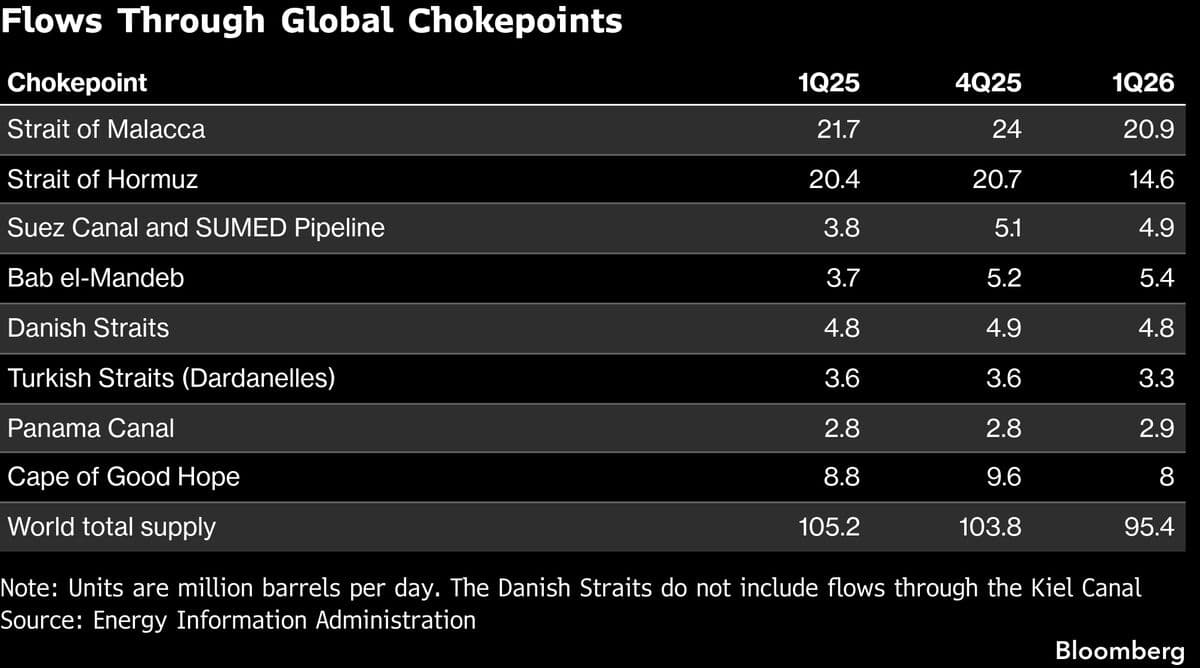
EIA Reports Nearly 30% Decrease in Oil Flows Through Hormuz Last Quarter
🤖AI Özeti
In the first quarter of 2026, crude oil and fuel flows through the Strait of Hormuz decreased by nearly 6 million barrels per day. This significant drop marks the beginning of a seismic energy shock that has disrupted global oil supplies. As a result, oil prices have surged, reflecting the heightened tension in the market.
💡AI Analizi
📚Bağlam ve Tarihsel Perspektif
The Strait of Hormuz is a crucial passage for oil shipments, accounting for a significant portion of the world's oil supply. Any disruption in this area can lead to increased prices and supply chain challenges, affecting not only oil-exporting nations but also global consumers.
This article is for informational purposes only and does not constitute financial or investment advice.
Orijinal Kaynak
Tam teknik rapor ve canlı veriler için yayıncının web sitesini ziyaret edin.
Kaynağı Görüntüleİlgili Haberler
Tümünü Gör

NewsAI Mobil Uygulamaları
Her yerde okuyun. iOS ve Android için ödüllü uygulamalarımızı indirin.