
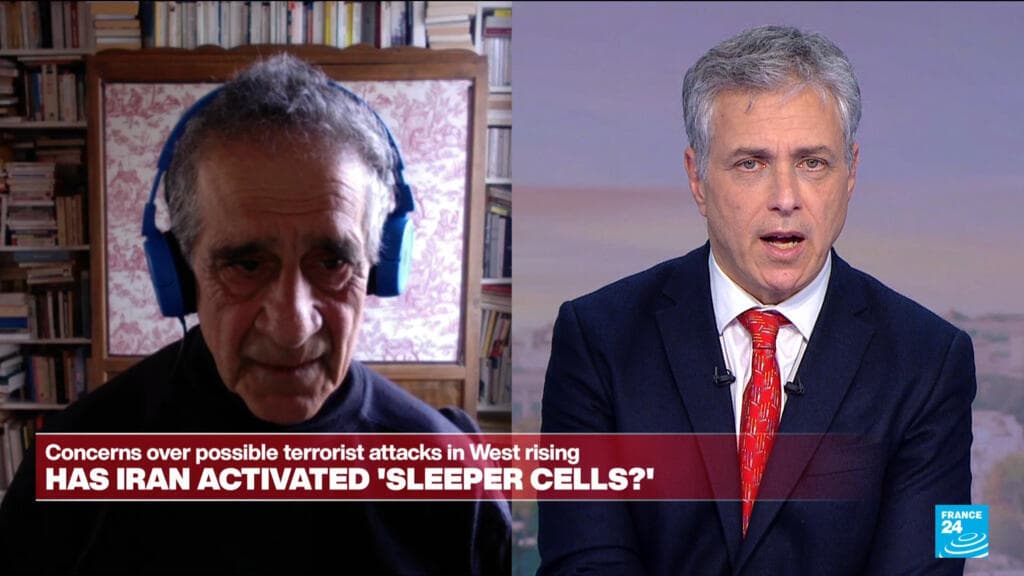
'Mental, subjective impact': Iran taking on 'American might' with cyberterrorism
🤖AI Özeti
In a discussion led by François Picard, Farad Khajkvar analyzes the current state of Iran, suggesting that religion has become secondary to political ambitions, which are now heavily influenced by the Revolutionary Guards. He argues that the leadership transition following Khamenei's rule lacks true institutional legitimacy and is characterized by a reliance on coercive power. The new leadership is perceived as weaker and more dependent compared to its predecessor.
💡AI Analizi
📚Bağlam ve Tarihsel Perspektif
Iran's political structure has long been a blend of religious and military influence, but recent developments suggest a troubling trend where military power overshadows religious authority. As the nation grapples with internal challenges and external pressures, the effectiveness of its leadership will be crucial in navigating the complexities of both domestic and international arenas.
The views expressed in this article are those of the author and do not necessarily reflect the views of France 24.
Orijinal Kaynak
Tam teknik rapor ve canlı veriler için yayıncının web sitesini ziyaret edin.
Kaynağı Görüntüleİlgili Haberler
Tümünü Gör

NewsAI Mobil Uygulamaları
Her yerde okuyun. iOS ve Android için ödüllü uygulamalarımızı indirin.