
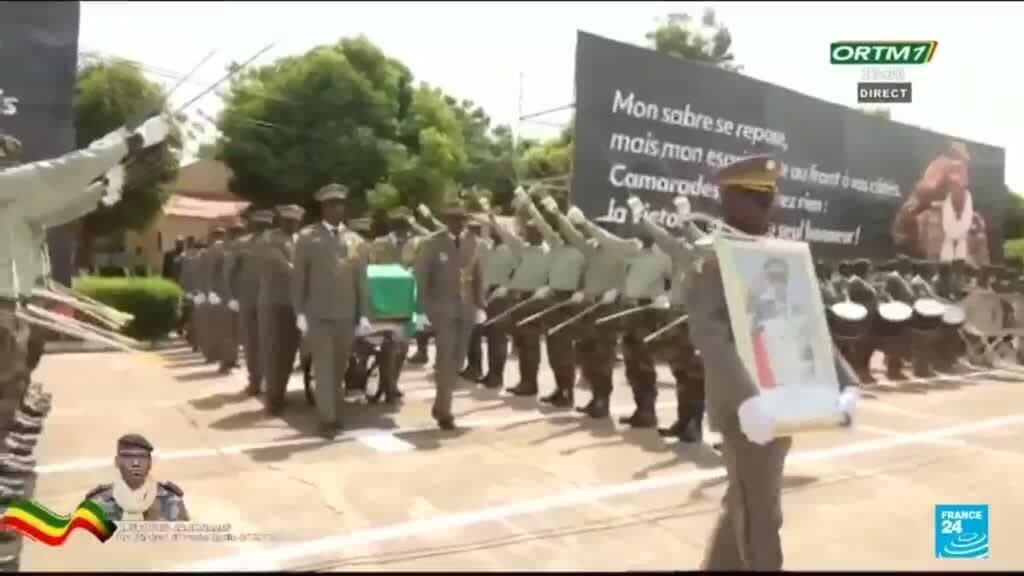
'Military force unable to solve Mali crisis': Is political solution only 'viable path forward'?
🤖AI Özeti
Mali's junta faces a deepening crisis following the death of Defence Minister General Sadio Camara, prompting discussions on the viability of a political solution. Paul Melly from Chatham House highlights the complexity of the current situation, which features a new alliance between jihadists and Tuareg separatists. Unlike the 2012 crisis, external military intervention seems less feasible, as Mali's geopolitical landscape has shifted significantly, leading to a potential pivot towards diplomacy as a solution.
💡AI Analizi
📚Bağlam ve Tarihsel Perspektif
Mali's current crisis is marked by a complex interplay of local and international factors, including the country's withdrawal from ECOWAS and a distancing from traditional allies like France. The rise of jihadist groups and the Tuareg separatists has created a multifaceted conflict that challenges simplistic military solutions. The historical context of Mali's struggles, particularly the 2012 crisis, serves as a backdrop to the current situation, highlighting the need for a nuanced understanding of the region's politics.
This article reflects the opinions of the contributors and does not necessarily represent the views of France 24.
Orijinal Kaynak
Tam teknik rapor ve canlı veriler için yayıncının web sitesini ziyaret edin.
Kaynağı Görüntüleİlgili Haberler
Tümünü Gör

NewsAI Mobil Uygulamaları
Her yerde okuyun. iOS ve Android için ödüllü uygulamalarımızı indirin.