
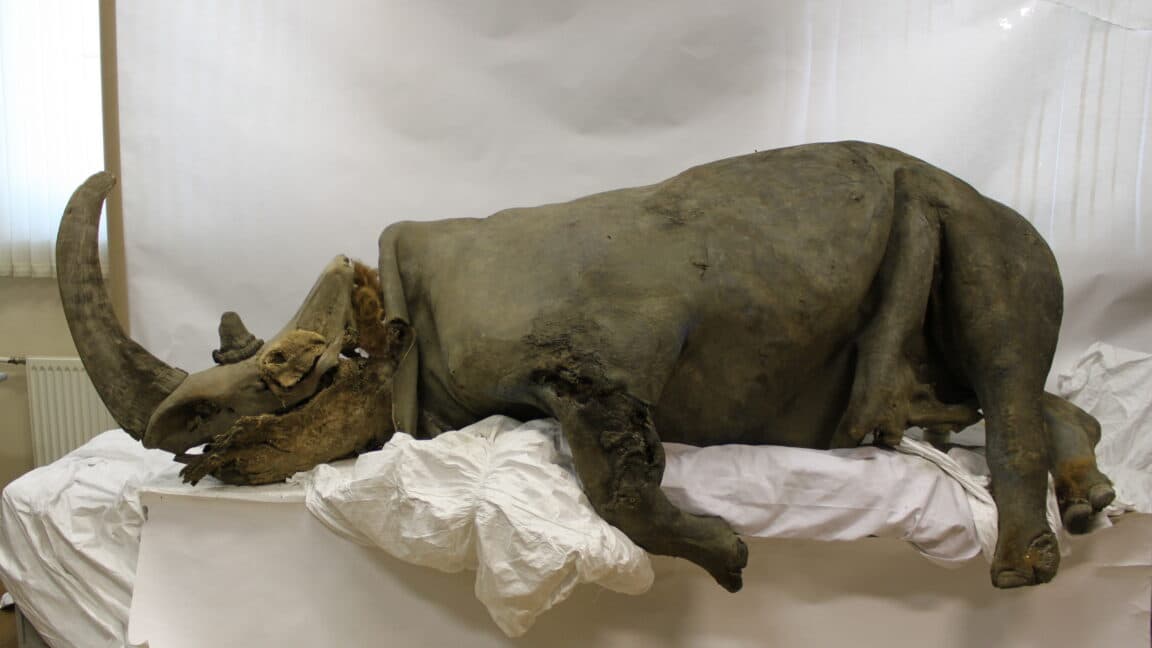
Scientists sequence a woolly rhino genome from a 14,400-year-old wolf’s stomach
🤖AI Özeti
Paleogeneticists have successfully sequenced the genome of a woolly rhino from a 14,400-year-old sample found in a wolf's stomach. This remarkable finding highlights the unique preservation conditions that allow ancient DNA to be recovered. The discovery not only sheds light on the woolly rhino's genetics but also offers insights into the ecosystem of the time. Such research enhances our understanding of extinct species and their interactions with contemporary fauna.
💡AI Analizi
📚Bağlam ve Tarihsel Perspektif
The woolly rhino is a well-known extinct species that roamed the Earth during the last Ice Age. Advances in genetic sequencing technology have made it possible to analyze ancient DNA, providing a window into the past and the evolutionary processes that shaped current biodiversity. This discovery is part of a broader trend in paleogenetics, where researchers are increasingly able to extract and analyze DNA from ancient remains.
This article is based on research findings and may not represent the consensus view in the scientific community.
Orijinal Kaynak
Tam teknik rapor ve canlı veriler için yayıncının web sitesini ziyaret edin.
Kaynağı Görüntüleİlgili Haberler
Tümünü Gör

NewsAI Mobil Uygulamaları
Her yerde okuyun. iOS ve Android için ödüllü uygulamalarımızı indirin.